How To Update LinkedIn From "Corporate You" to "Your Personal Brand"

LinkedIn used to be a space where you copy/pasted your resume.

It is now a space to be more than your job…if you give yourself the permission to do so.

This past week, I had a long conversation about LinkedIn with a woman. We’ll call her Anna.

Anna works a corporate job, but is trying to grow her health coaching business on the side. She showed me all these amazing resources she created, and said she wanted to get them in front of more people on LinkedIn. Not in a salesy way, but to act on her mission of helping people take control of their health.

I pulled up her profile and while she had made a few posts about health coaching, her profile didn’t really tell me that she wanted to connect with people on health coaching.

Like a lot of us, Anna’s LinkedIn reflected her “corporate self.”

But what happens when we decide to be more than our corporate job?

What happens when we want to connect with people on other topics?

When we want to be the corporate employee AND the person outside of work with deep passions and interests?

It can be scary to have non-work conversations on LinkedIn though, right?!

If you’re only connected with people you’ve met in the corporate world and therefore your feed is filled with only new job announcements and promotions, it can be hard to give ourselves the permission to start conversations about other topics.

But when we start conversations about what we are interested in, it gives us the opportunity to connect and find “our people.”

Anna and I talked about 3 small tweaks she could make to LinkedIn to embrace being a corporate employee AND connecting with people on her passion of health coaching.

1) Change your bio to include your hobby, side business, interest, or another hat you wear

Changing your bio (below your name) communicates to people who you’re and what you’re up to.

A coach, writer, volunteer, boy mom, dog mom, business owner. You can include your corporate job and these other hats.

This doesn’t have to be a grand declaration.

Think of it as a conversation starter and connection point.

Pro tip: if your goal right now is to grow in your corporate job, list that 1st in the bio. If your goal right now is to connect with people on other topics, list those 1st.

Reason being - when you comment on someone’s post, you can only see the 1st part of your bio, so be intentional about what is shown.

2) Use Canva to make a banner photo that reflects you

Have fun with this one!

The LinkedIn banner is the 1st impression on your profile and fun way to communicate who you’re and what you’re up to!

Bright colors? Moody colors? Include your corporate title? Or maybe the other hats you wear?

Canva has so many LinkedIn banner templates for you to play with, and gives you the opportunity to communicate what types of things you want to connect on.

Pro tip: allow this to evolve as you evolve! This is your space to show your personality and not take LinkedIn too seriously :)

3) Start posting 1x per week

This gets you talking about your interests and helps you figure out what topics drive the most conversation.

Posting 1x per week eases people into your posts without worrying about “being annoying” with posting a lot.

Also, LinkedIn doesn’t show every post to every person so not everyone will see it.

Pro tip: post a picture with it! LinkedIn is 40% more likely to show it if you have a picture, meaning you’re 40% more likely to connect with “your people.” Posting different types of pictures in each post helps keep things fresh.

If you’re nervous about putting yourself out there on LinkedIn, ask:

“what do I want to have more conversations about?”

Because the online conversations turn into in-real-life conversations, which turns into you finding your people :)
 

A Different Way to Make Your To-Do List

I recently changed how I use to-do lists (because the list got a little too long)

Instead of having 1 list, I have:

  • 1 list of activities that require mental energy (anything detailed)

  • 1 list of activities that don’t require mental energy (anything I can do on autopilot)

Then I think about:

  • When I have my most mental or creative energy

  • When I have my least mental or creative energy

Then I align the two.

For example:

  • In the morning - I have my most mental energy. Therefore, I reserve that time to do the activities on my “high mental energy to-do list.”

    • Ex: writing, practicing speaking, doing anything detailed

  • In the evening after work - I have my least amount of mental energy. Therefore I reserve that time to do the activities on my “low mental energy to-do list.”

    • Ex: dishes, laundry, emails, anything on autopilot, etc.

As someone who has big goals and is balancing a lot of things, this has been a way to prioritize my goals, without leaving them the energy scraps.

On the days where the to-do list gets so long it stresses me out - I can:

  • Take a step back

  • Recognize if my energy is high or low right now

  • Start with just 1 thing that matches my energy in that moment

  • Recognize that I don’t have to do everything right now

Time management is just scheduling - energy management is scheduling smarter not harder.

I hope you don't leave yourself or your big goals the energy scraps of the day.


How to Bring Your Partner Along In Your Goals

Have you ever wanted to talk about your goals or Yellows with your partner, but never felt like it was the right time?

I remember being in past relationships and wanting to ask the other person about how their goals were going, or wanted to update them on mine.

But when was the right time?

  • After a really long, tiring workday?

  • When we had 15 minutes on the way to dinner with my family?

  • Was the other person in a headspace to have that conversation?

So when 1 year ago my boyfriend asked me if we could have a weekly, Sunday morning breakfast to talk about our goals - I was totally on board!

Especially since we didn’t live together, Sunday morning breakfast created a clear time for us to connect.

yes this is us in our matching Maisy sweatshirts :)

As two very busy people going after big goals — me writing a book and him building a rocket (yes we are going big here) — our Sunday morning breakfast has been key to balancing our personal goals with the relationship.

Our relationship is not perfect, but here are 4 questions we ask over Sunday morning breakfast that have opened the lines of communication on our goals:

  1. How did your goals go last week?

    This is great accountability to whatever you said you were going to do the week before.

    I’ve also found this to be a great designated time to check in, instead of every day asking “hey did you do that thing yet?”

  2. What are your goals this week?

    Makes you get clear on the priorities for the week, and helps you communicate to the other person what you have going on and where you’re putting your energy.

  3. How can I make this week easier on you?

    Does dropping off dinner make your day easier? Does letting the dog out Thursday make your day easier?

    I also think about it as enabling the other person to meet their goals - such as being on board with shutting off the Netflix and going to bed because you know the person needs to sleep before a big day tomorrow.

  4. What is something the other person did to make you feel loved this last week?

    I saw someone on LinkedIn post this and wish I remember who, but this is how we close our Sunday morning.

    It has helped us acknowledge the little things each other does amongst the busyness.

    And you might think you know the other person’s answer to this question, but almost every week I am surprised what stood out to him ;)

The best part about these questions? Meeting your goals becomes a lot more fun because someone has taken the ride with you ;)


3 Ways Journaling Will Take Your Yellow to the Next Level

For the past 7 years, there is 1 person who vets my ideas before anyone else hears them.

Well it’s net technically a person - it’s a place.

My journal.

Journaling has given me the confidence to go from:

  • Taking yoga classes -> getting yoga teacher certification

  • Writing a newsletter -> writing a book

  • Living in an apartment -> buying a house

If you have an idea for a Yellow - hobby or project that brings you joy - here are 3 ways journaling will take it to the next level:

1) A safe space to start writing down the crazy ideas

Maybe you have an idea for a Yellow, but you are hesitate to say it out loud to someone.

Your journal can be a safe place to first write down the thought. As you write them down more, they may start to seem less crazy.

2) A place to expand your ideas

As you journal more about your Yellow, you’ll start to see your idea expand.

A once cringy, crazy, half-baked idea becomes something tangible you can envision yourself doing and being excited about.

Maybe that little idea starts to change who you become.

3) A way to figure out how this fits into your life & who you want to be

Your journal is a space to figure out how your Yellow fits into the rest of your life.

When are you going to work on it?

Who does it help you become?

A morning journaling practice is can be a way to prioritize writing about your Yellow - doing it 1st thing in the morning.

And eventually 1 morning, becomes 2 mornings, which becomes a week, a month, a year, and then your life.

Each morning journal session is you getting closer to the best version of yourself.


What is Growing vs. What is Coasting This Week?

“How can I do it all?” might be the wrong question.

Instead, let’s start asking -

What is growing this week and what is coasting this week?

I’m in a season where I’m trying to balance writing a book, speaking business, work travel, friends’ bachelorette parties, a relationship, and a very demanding puppy.

There is pressure to perfectly give 100% to everything all the time.

But trying to make everything perfectly equal can lead to a perfect disaster of burnout.

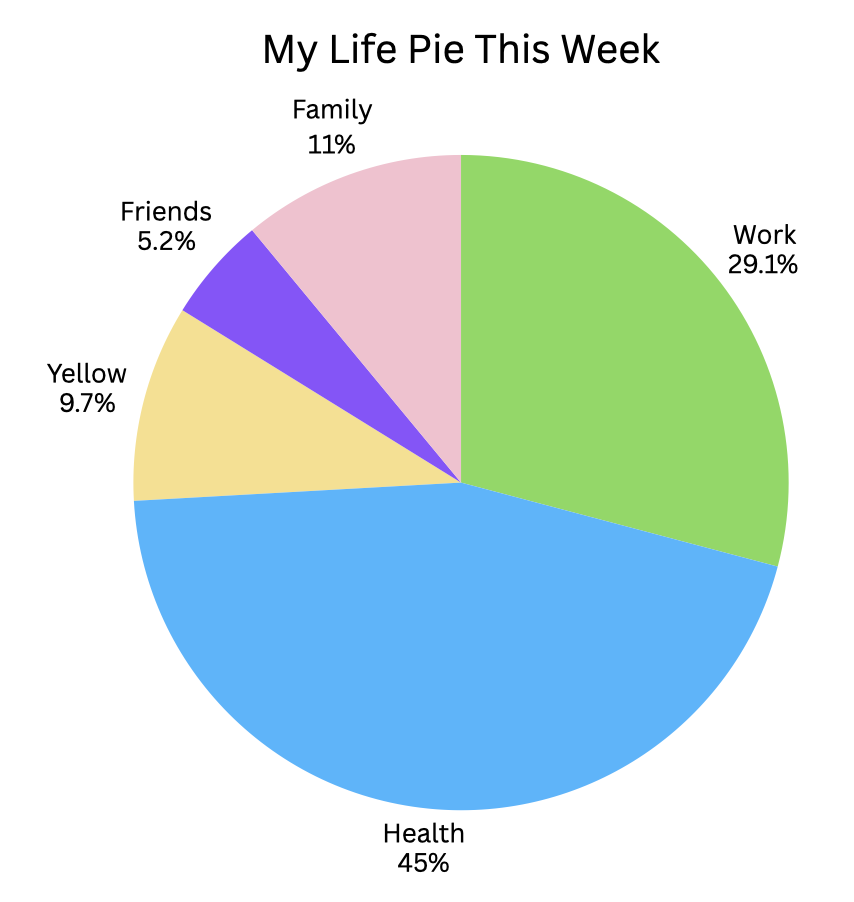
When we look at our Life Pie - family, friends, work, Yellow, health, etc. - the pieces don’t have to be equal every week.

They can shift and change.

Maybe this week -

  • The focus needs to be on growing work because there is an important presentation that requires some extra hours

  • While maybe health coasts with 2 workouts instead 4

Maybe next week -

  • The focus is your Yellow because you’re hosting a community event

  • While work coasts and still solid, but you aren’t doing the extra things you usually do to go above and beyond

Coasting doesn’t mean you’re failing or you’re saying something is no longer on your Life Pie priorities.

Coasting is making 1 piece smaller temporarily so you can grow another.

Because growing one thing well beats burning out trying to grow it all.

As you go into this week:

  • What is growing?

  • What is coasting?

And own the answer.


How To Save 20 Minutes Getting Ready In The Morning

I’m not really into beauty routines.

But if there’s a way to get back 20 minutes of my morning without waking up earlier? I’m listening.

If we want more time for Yellows (hobbies + projects), what if we cut down our getting ready time?

Getting ready isn’t really about how we look — it’s usually just a routine we’ve never really questioned.

Here are 4 of my favorite getting-ready time savers:

--

1/ Showering

If you shower in the morning, consider if that is the best time for you to shower?

Maybe yes - if you workout in the morning, it’s the thing that wakes you up, or it’s the only quiet time you get in the day

Maybe no - if it’s just the way you’ve always done it

This could create space to use your freshest energy on your Yellows.

--

2/ Hair routine

Consider if some days can be a “hair up claw clip day” vs. “full hair routine” day. Both have a place — one just saves you time.

Find a simple version of your hair routine that saves you time, while still feeling confident.

--

3/ Makeup routine

Just like hair - consider if some days can be a “simple makeup” vs. “full make up” day.

During covid - I tried the simple make up routine and I was shocked how a little goes a long way in terms of confidence and saving time.

--

4/ Deciding what to wear

To avoid taking the time to try on 5 outfits before work, consider picking what to wear the night before.

You could even have a section in your closet for “work clothes.”

You know they fit and know they’re appropriate. You can go directly to that section and remove a lot of time deciding and finding clothes.

That 15–20 minutes you save getting ready becomes a:

🟡 Walk

🟡 Journal page

🟡 Workout

🟡 Creative time

And starting your day on your terms.


Why It's Important To Find The Adult Version of Your High School Sport

1 day, it all just stops.

Remember the sport or activity you did in high school. Remember when you would get out of school and go over to practice every day.

Maybe you were the soccer player, cheerleader, 1st chair in the band, or lead role in the school play.

How happy you were when you scored the goal, nailed the cheer, or took your final bow at the band performance or musical. Your parents, friends, and school cheering you on in the crowd.

Then you graduate, and for a lot of us, it all just stops.

According to the NCAA’s 2022-2023 report, less than 7% of high school athletes had a probability of competing at the college level. Less than 1% of those that did play at the college level go to the professional level.

That leaves 99% of people not continuing with their sport and likely wandering to find something to replace that void.

The stats make it not surprising that people graduate from college, get a job, and then say, “now what?”

What if we could have an adult version of our high school sport or activity?

  • Something that contributes to our purpose, happiness, and identity.

  • Allows you to be someone outside of work and put your energy towards something other than work.

  • Something that makes work more tolerable, and you possibly better at it.

I refer to having our adult sport or activity as having a Yellow

Yellow: a hobby or project that brings you joy outside of work.

Your Yellow could be:

  • Writing

  • Yoga

  • Dance

  • Podcasting

  • Soccer league

I hope you can find Yellow that gives you that similar feeling to when you were playing your sport.

That sense of purpose, happiness, identity, joy, growth, and/or connection.

Because we all deserve to be fulfilled at every stage in our life.


How to Draw Your Unbalanced Life Pie

Last week, I heard someone say if they read something that references “work/life balance” - they immediately stop reading.

They stop because they don’t think there is such thing as “work/life balance.”

I get it - it’s overused and everyone has their own definition of it.

My personal definition - work/life balance doesn’t mean a perfect balance of work and life.

Work/life balance means making sure:

  1. You make time for the most important things in your life (so they don’t get forgotten)

  2. Being where your feet are when you’re doing these important things

The Life Pie Exercise can be a visual way to think about this:

If your life was a pie, what are the 3-6 pieces of your life?

  • Work

  • Family

  • Friends

  • Health

  • Yellows (hobbies & projects)

I found over the past 7 years of watching people draw their Life Pie — they often worry about if the pieces are equal, proportional, or “balanced.”

Let’s throw those words out the window and draw an “unbalanced Life Pie” knowing:

  1. The pieces are never going to be perfectly equal in terms of your time or energy

  2. The proportions are going to fluctuate week to week (more hours working this week, more time with family next week)

If you draw an unbalanced Life Pie but you’re proud of the pieces you have on it, you’re perfectly in balance with yourself.


When is it Time to Stop Being Consistent (and Evolve Instead)

At the end of 2025, two top podcasters, Jenna Kutcher and Katie Gatti Taussin, ended their shows after publishing consistently for years.

Their reasons were similar —

Both mentioning something along the lines of making space for other things…although they both didn’t have plans for what the “other things” were.

This made me think about the relationship between consistency and evolution.

In our culture, we are rewarded for consistency:

  • We get better at what we do

  • Likely becomes easier the more we do it

  • People around us know what to expect (whether that’s our family, co-workers, or an audience)

But these two women reminded us to not forget about evolving too.

When something is no longer serving us or we need to let it go to make space for other things, that is ok.

When we are deeply ingrained in the consistency of something, it’s ok to listen to that little voice in our head that says:

“I think there is more than this” — even if we don’t know what the next thing is.

By removing something, we could be making room for something even better than we could imagine.

So thank you Jenna and Katie for reminding us that even after a long run of consistency, it’s ok to evolve too. I can’t wait to see what you do next!


How To Go From "Holiday You" to "Best You"

The week between Christmas and New Year's is a rollercoaster.

Maybe you’re like me and in the past week…

  • Maisy and I have slept in 3 different places while visiting family

  • I’ve been going to bed later than normal

  • Eating foods I don’t normally eat

  • Minimal exercise

  • Even my extroverted battery is so drained that it makes me a little moody

Easy to say I’m off my routine.

I always feel a little better when I remind myself this is the “holiday me” and not the “everyday me".”

But now it’s time to turn around and be the “best me” with new year’s resolutions.

It’s a rollercoaster that many of us are on together this week.

The 1 thing that keeps me sane on this rollercoaster ride this week (and every week)…

Journaling

  • Showing up to write down 3 things I’m thankful for when I only have 30 seconds of quiet.

  • Jotting down what I did yesterday with my family so I can savor the memories.

  • Writing 3 priorities for today so I don’t allow myself to say “I’m not doing enough”

  • Getting clarity on why that family member’s actions are bothering me and how I’m going to approach the next interaction with them

  • Mapping out where I want to be this time next year

I know journaling isn’t everyone’s jam, but can be the thing that doesn’t put us off the rails.

Journaling can be the check in to make sure “holiday me” doesn’t become “everyday me,” and I can transition into “best me” as we head into the new year this week!


How To Answer "So What Are You Up To?"

It’s a holiday week and you KNOW you’re going to get THE question:

“So what are you up to?”

(which is honestly progress to “how’s work?” or “how’s the weather?” so let’s be thankful)

You know you haven’t been up to “nothing” and you’re up to something.

Maybe you’ve been working on a special project and it’s scary to share because you don’t have all the pieces figured out yet.

But you know you’re more than just the person that eat, sleep, works…

Earlier this week, I was at a networking event for creatives, and a girl mentioned she was scared to start writing about her special project online.

Someone else chimed in with an interesting suggestion:

What if you wrote a post that said,

“Right now, I’m working on this.” Then the next post is “Right now, I’m working on this.”

I liked the suggestion because it doesn’t require you to have it all figured out before talking about it.

As we go into the holiday - I’m going to practice this “right now” response (because even after 6 years of writing online, I still get scared)!

Allows me to:

  • Tell people what I’m working on (without it being a grand declaration)

  • Practice saying it out loud

  • I may just find some of my biggest cheerleaders, supporters, collaborators and connectors to other people

But I never will if I don’t share it.

This holiday - instead of the “so what are you up to?” question being scary, it’s the perfect opportunity to share the special projects that that make it easier to get out of bed in the morning.


How To Find Your Hobby For 2026

If you want 2026 to be the year of growth, start thinking bigger than just your health or career goals.

I hope you set a goal for your Yellow.

Yellow: a project, idea, hobby, or experience that brings you joy outside of work.

And it’s ok to not know what your Yellow is!

Here are 3 questions to help:

1) What is something you did as a kid that you could do the adult version of now?

For me - doing gymnastics turned into doing yoga as an adult, and making magazines turned into writing blogs as an adult.

Your Yellows have always been inside of you, maybe they just got quiet amongst the other responsibilities you had.

If you have trouble coming up with something, what you’re consuming could give you some signs to what you’re interested in.

2) What is something that intrigues you on social media, tv, etc.?

This is where the scrolling or tv binging can become productive. What is something you thought was interesting or cool that you could maybe try?

Dancing, coding, podcasting, etc.

The reason why you’re consuming the content is probably because you like it, so don’t just watch it, start doing a version of it!

But what if it doesn’t feel like the right time in your life?

3) What is something that would be fitting to do in this stage of life?

Maybe you’re in a stage where you don’t have a lot of responsibility yet. Consider doing the Yellow that takes more time or energy (and do it now while you can)!

Traveling, taking a course, etc.

Maybe you’re in a stage where you have small kids. Consider the hobbies or experiences that could be fitting for this stage of life.

Taking photographs of them, designing their bedroom, etc.

I hope 2026 is the year you don’t just DREAM about your Yellow, you DO something about it.


Time Management is Out, Energy Management is In

I’m convinced we don’t need better time management, we need better energy management.

Tuesday night 7pm -

I had some extra time so I thought I would sit down and write my newsletter for next week.

I found myself struggling to pick a topic and didn’t write more than 3 sentences in a hour.

I was frustrated that I wasn’t putting out great work in this hour I had.

But I knew better.

Over the past 6 years - I’ve learned how my body and mind operates:

  • I am the most creative in the morning when I have my freshest energy

  • I don’t usually have a lot of creative energy after I’ve worked my 9-5 job all day

Doesn’t mean I can’t write at night. I just probably shouldn’t expect to get the same result as when I do it in the morning.

This is where energy management comes in:

Aligning your schedule with how you operate in order to get the most out of your time.

  • I do creative work as part of my morning routine so I can use my freshest energy

  • I workout after my 9-5 because my brain is usually tired and I’ve been sitting all day, so it’s a good time to move my body

  • I do any writing before I jump into emails or social media because I know the writing won’t happen after

Energy management

But yes it’s not always possible based on responsibilities we have.

  • Maybe we need to be at work early so it’s hard to make anything happen in the morning

  • Maybe your dog or kids need attention at certain times

What are the small things we can do to even slightly align our schedule with our energy?

  • Taking 5 minutes in the morning to jot down ideas for your side project

  • Not using social media until after your morning routine is make space for that creative thoughts

  • Doing Youtube video workout at home instead of going to the gym

So I sit here writing this to you on a Sunday morning at 8am. I’m not only getting it done, but it feels good too.

Time management is just scheduling.

Energy management is scheduling smarter, not harder.


How To Not Let Your Ideas Get Stuck In Your Notes App

It always starts the same way — a steering wheel, a podcast, and a spark that feels too possible to ignore.

  • You’re driving into work.

  • You’re listening to a really empowering podcast.

  • You’re now inspired to start a side project.

  • You’re brainstorming all the ways you can make it happen.

  • You arrive at work, park your car, and take down a few notes in your phone so you don’t forget the ideas.

  • You walk into work, sit down at your desk, and let out a big exhale as you switch your brain over to work mode (when all you want to do is take action on these ideas).

You work your 9–5 because that’s what you’ve got to do — but what happens to those notes in your phone?

Most of the time, they get stuck there.

They just stay as ideas.

And more get added to the list during the next morning commute…

But what if those ideas got prioritized?

What if those IDEAS became ACTION?

ACTION happens 1 morning at a time.

  • Get up.

  • Take action on your idea.

  • Get the early win.

  • Continue with your morning commute.

Then 1 morning becomes a week, a week becomes a month, and months become years.

Those mornings strung together become your life.

A life where your ideas become reality, instead of just living in the notes section of your phone.

A life where you aren’t just showing up to your desk as a 9-5er anymore — but as someone actively building something bigger.


Why It Takes So Long To Find Your People

For 6 years - I thought if I just…

  • Read more

  • Write more

  • DO more

…I’ll be successful in my hobbies, business, and whatever projects I want to pursue.

But I was missing a piece I’m almost embarrassed to admit now…

People. Being around the right people.

This year, I’ve leaned into finding “my people”

  • Speaking community

  • Writing community

  • Parter/family/friends/co-workers who are working on their own projects

And wow my business, purpose, happiness, and excitement for my projects has accelerated like crazy!

For the 1st time - I feel like I have really strong supporters, collaborators, and people who get it!

For the 1st time - I feel like I’m not going at it alone.

But why did this take so long to find?

For me - it’s been 3 things:

  1. Didn’t always have clarity on what I wanted to do - so I didn’t know who to look for

  2. I was sometimes scared to bring up my idea - so I didn’t always give people the opportunity to connect or support me

  3. I didn’t always identify as an entrepreneur, speaker, writer - so I felt like an imposter showing up in those spaces.

But maybe we don’t have to know what we want to do. We just have an itch or a half baked idea.

Maybe it’s ok to be scared.

Maybe we don’t have to BE anything.

Because we’re all just trying to figure it out, right?!


Morning Routines Are A Tool, Not A Destination

After 6 years of writing about them - I’ve decided Morning Routines are misunderstood.

People treat morning routines as a destination.

When we do that -

  • We maybe wake up at 5am a few times to workout

  • Check the box to say we did a morning routine

  • But on day 4 wake up, hit snooze, & decide “eh the morning is just not for me”

Sound familiar?

BUT

When we treat morning routines as the TOOL to get to your destination, that’s when the real magic happens ✨

When we know exactly WHO we want to become and WHAT we want to do...

  • A runner who can run 13 miles

  • An entrepreneur who builds a side business while working a 9-5

  • A writer who posts weekly

  • A healthy person who can climb a mountain with their friends

Morning routines become the key to unlock the door to our best selves 🔑

Let’s stop treating morning routines as a destination

Start treating them as the tool to get there

Because that’s what’s actually going to get you out of bed 😎


You're Planting Seeds For Future You Right Now

I just finished 30 days of eating no gluten, dairy, or peanuts to help with some health issues I was having.

I thought this would be incredibly difficult.

But there is 1 reason why it wasn’t.

Back in 2022 - I decided I was going to cut back on alcohol.

I did this by:

  • Replacing alcohol with mocktails

  • Getting comfortable not drinking what everyone else was drinking around me

  • In moments of temptation, reminding myself that what I was doing was getting me closer to my goals

I flexed these muscles and did these reps over and over and over again.

Because I had flexed these muscles with alcohol over the past 3 years, I felt confident that I had the tools to take on this diet now.

A similar story happened with waking up early for my morning routine.

I woke up at 6:30am for a while, then I tried 6:15am, and then 6am.

Once I proved to myself that I could wake up 15 minutes earlier, adding another 15 minutes every 6 months or so didn’t seem as daunting.

This story also happens:

  • When running 1 mile a day becomes running 10 miles 6 months later

  • When attending a networking event becomes someone you met offering you a job 2 years later

  • When writing a blog post once a week becomes you having a column in a publication 10 years later

The seeds you planted a long time ago are blooming now (so give yourself credit for that).

The seeds you plant today will bloom later (even if it’s not in at the speed or in the way you wanted them to).

You’re planting seeds for future you right now.

The little things, the little reps you’re putting in right now are going to pay off.

So keep going!

I remind myself this as I sit here eating my gluten-free, dairy-free pizza that is (hopefully) getting me closer to my happiest, healthy self :)


3 Steps To A Phone Free Morning Routine

You may think work starts when you open your laptop - but sometimes it starts before you even get out of bed.

Have you been in this scenario?

  • Alarm goes off, maybe hit snooze, 1st thing you do is grab your phone

  • You see there is a work email on your Lock Screen

  • You click on it, read it, and then check the rest of your emails

Work has now started before you’ve even gotten out of bed…all because a work email popped up on your Lock Screen.

Maybe you’re glad it popped up because the project you’re on at work is time sensitive… and requires all your energy and all your time and nothing else in your life is important right now.

BUT - there is a chance that is not the case.

If you want to take control of your time and attention, and YOU be the one to decide how your day starts -

Here are 3 steps to a phone-free morning routine:

(these steps are for iPhone, but they’re very similar for Android)

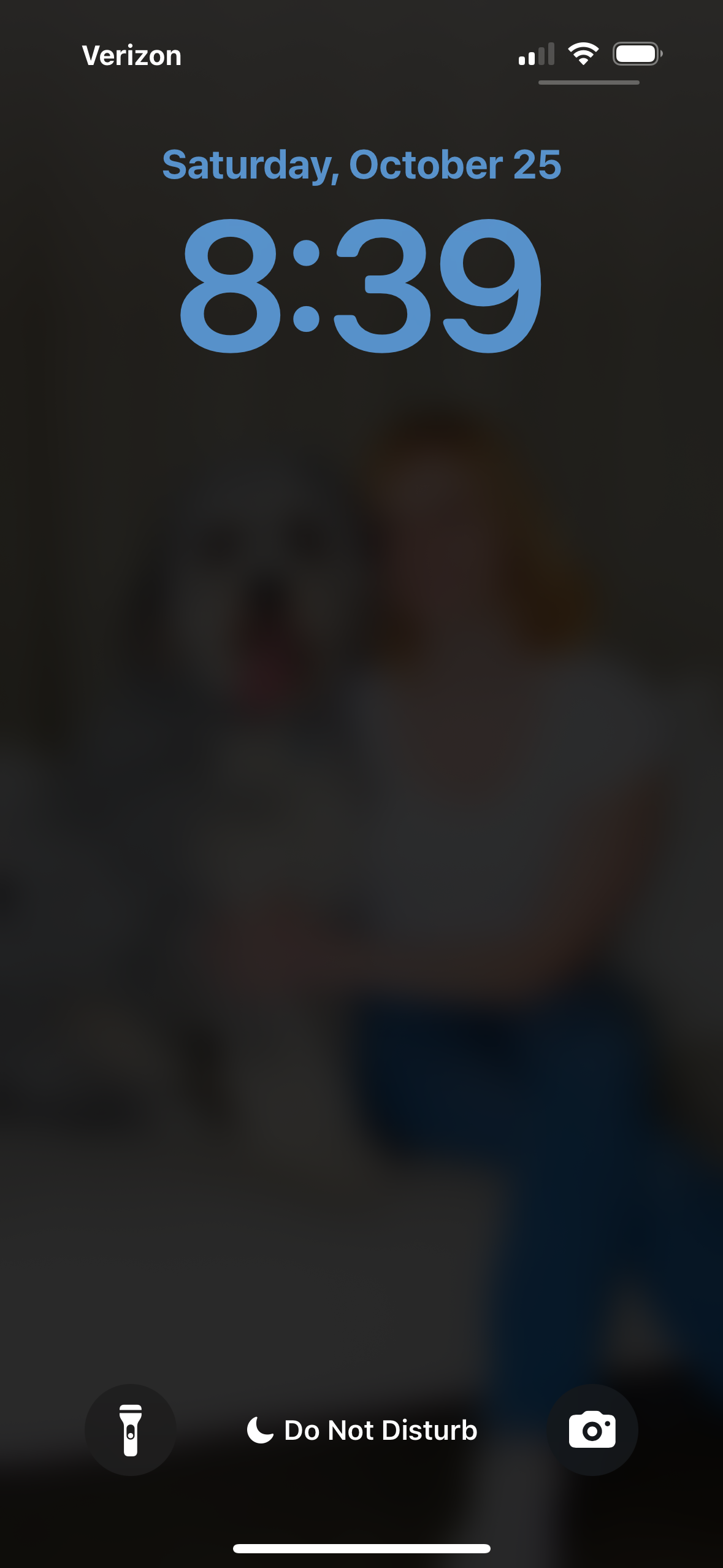
1) Go to Settings → Focus → Do not disturb

This will turn off all of your notifications for a certain period of time. Your Lock Screen will look like this.

2) Under allowed notifications

Select who is the EXCEPTION and can contact you when on Do Not Disturb. Be really intentional about who this is.

For a lot of people, this is a spouse, elderly parent, or child.

  • People → Add your personal contacts (family, friends).

  • Apps → Add messaging apps you want (iMessage, WhatsApp, etc.).

3) Schedule → Set start/end time

This is the time the Do Not Disturb is enabled.

Ex: 9:00 PM → 7:00 AM

This could be your bedtime → end of your morning routine so you don’t go to bed or wakeup with notifications popping up.

Below is a video of the 3 steps:

Enabling Do Not Disturb can be the difference between you deciding how your day starts and someone else deciding for you.

So what will you choose?


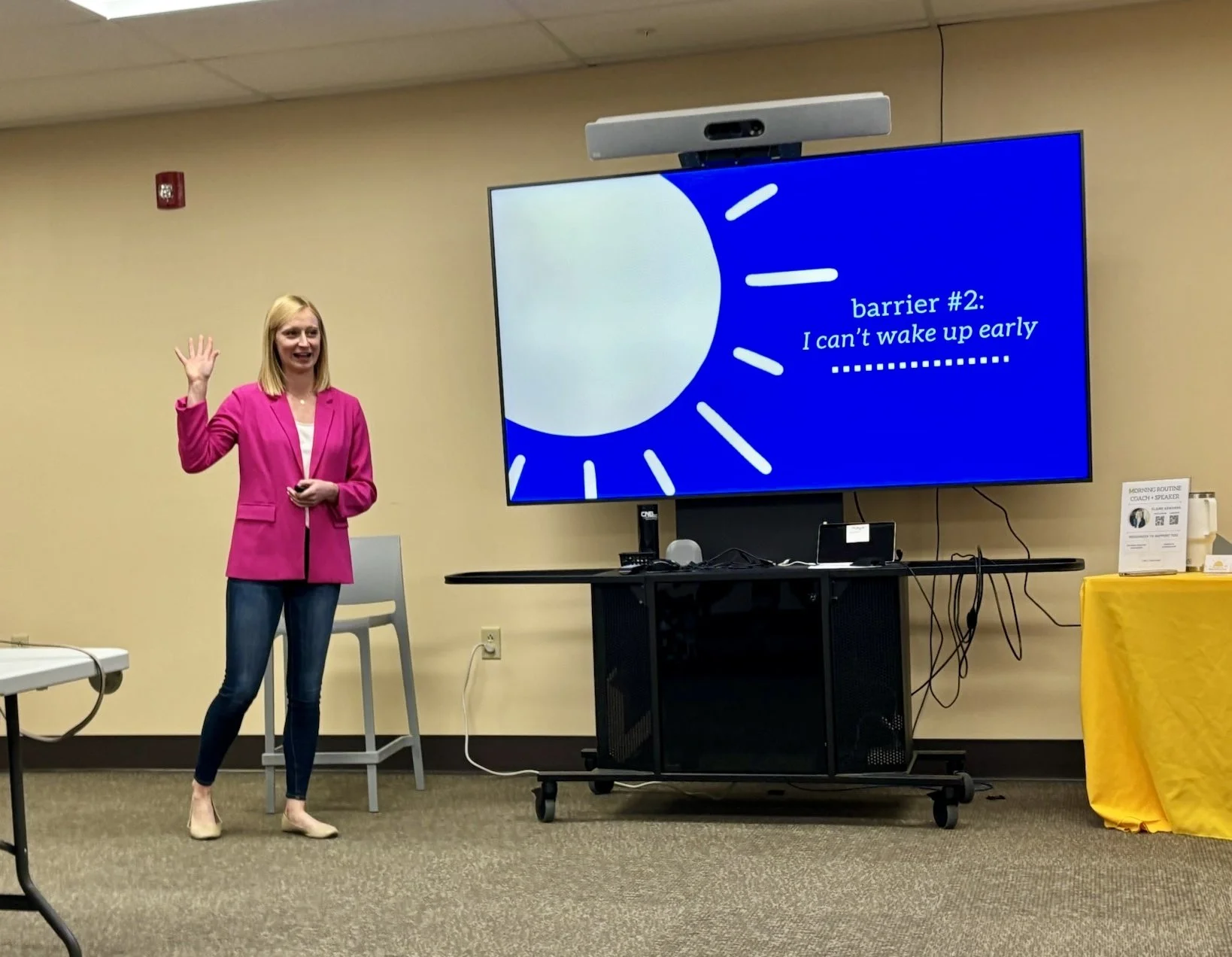
How to Wake Up Early Even If You're Not A Morning Person

If waking up early is your biggest hurdle to morning routines, you aren’t alone.

Me 8 years ago:

  • Alarm goes off, hit snooze 9x times

  • Scroll phone for a bit

  • Get out of bed last minute

  • Rush to get ready for work

I was not a morning person.

Me now:

  • Wakeup at 5:30am

  • Walk Maisy

  • Eat breakfast

  • Journal

  • Work on my speaking business

  • Get ready for my 9-5

I wasn’t trying to become a “morning person” - I just wanted to become a person who did something besides work.

The morning just happened to be the best time for me so that required waking up early.

If you want to wake up early to do something besides work - here 3 ways to make it easier:

1. Have a plan for your morning routine.

Know what you want to do in the morning before you go to bed. Coffee, a quick stretch, or jotting down priorities — gives your morning purpose and momentum.

Not to mention - having a plan for the morning gives you a reason to go to bed earlier.

2. Start with just 10 minutes earlier.

You don’t need to leap out of bed an hour earlier. Move your wake-up time 10 minutes earlier every few days.

Small, gradual shifts stick and prevent that groggy, “why am I doing this?” feeling and prove to yourself that you CAN wakeup earlier!

3. Put your alarm across the room.

Out of arm’s reach means you actually have to get out of bed to turn it off.

Once you’re moving, it’s easier to keep the momentum going — and harder to hit snooze or scroll in bed.

✨ You don’t need to be a morning person — you just need a plan, small steps, and some phone musical chairs to start your day on your terms.


How To Build Your Personal Brand In The Morning Before Your 9-5

The early days (mornings) of building my brand in 2020

In 2019 - I was posting a weekly podcast about wellness and was too embarrassed to tell people at my 9-5 job I was doing so.

Now in 2025 -

  • I post 2x a week on LinkedIn

  • Write 1 newsletter a week on Substack

  • Host multiple Morning Routine Workshops a year at my 9-5 corporate job

  • Am often greeted with “hey you’re the morning routine girl” when I meet someone new at work or at a conference

In 6 years - I’ve made so many…

  • Scary

  • Wandering

  • Cringy

  • Exciting

  • Throw-spaghetti-at-the-wall

  • So-worth-it…

…mistakes while building my personal brand.

But I got up early (most) mornings with the belief that there is so much more to me than my 9-5 job title — and building a personal brand that includes my interests/passions/quirks would be a testament to that.

If you want to be known for something and start building your personal brand online in the morning before your 9-5, here are 3 things I would do (and not do).

1) Ask — What do I want to have more conversations about?

This question helps you:

  • Experiment with topics

  • Gather data on what you enjoy talking about and what others enjoy hearing from you

  • Move past the fear of what people might think

It’s normal for thoughts like “What will my coworkers or friends think?” and “I don’t exactly know where I’m going with this” —to creep in.

Asking a low-pressure question like “What do I want to have more conversations about?” helps you:

  • Find your people who will like, comment, and engage with your content

  • Realize everyone else will scroll by and not think twice!

Ask yourself this question and see where it takes you.

2) Pick a Format & Platform You (and Your People) Like

It’s easy to feel like you need to post everywhere — but you don’t.

Pick one format and platform you enjoy and where your ideal audience spends time.

Then, get really good at it!

Examples:

  • Podcasting — perfect if you want to reach busy moms who listen in the car.

  • Instagram — great if you love visual creativity, like interior design

  • LinkedIn — ideal if you like to write and start conversations about topics like millennials in leadership.

If you like the format and platform, you’ll naturally:

  • Put more energy into it

  • Get better over time

  • Connect with people who enjoy your content too

3) Start Posting 1 Morning per Week

Creating before work ensures your personal brand stays a priority — and doesn’t get put on the back burner (again).

A weekly routine example:

  • Monday: Create your post

  • Tuesday: Edit and post

    (this gives you time to edit without overthinking)

Habit stack it:

  • Do it right after brushing your teeth or pouring your coffee.

  • Linking it to an existing habit increases consistency.

Create before you consume:

  • Write your post with a fresh mind before scrolling to avoid comparison trap or going down the rabbit hole.

Start small:

  • Begin with just one post a week.

  • You’ll be surprised how far 1 post a week pushes your brand (and your confidence)!